Nutri-Mithu: Portion Control for Rice and Curry
A nutrition tracker built for Sri Lankan meals - a food database, an app that turns biodata into portion sizes, and a lunch box with volume guides instead of measuring cups. Brainstorm 2025 finalist.
- Flutter / Dart
- FastAPI
- Firebase
- SQLite
- ESP32
- HX711 load cell
- BLE
- NVIDIA NIM
The problem
A doctor tells a patient to eat a cup of rice and half a cup of curry. The patient goes home to a plate of rice and curry and no measuring cups, and even with them, measuring every curry at every meal is not something anyone keeps up. Meanwhile the apps that track calories are built around foods that are not on the plate: there is no reliable table for a Sri Lankan rice and curry meal.
So the advice is sound and unusable, which is a design problem rather than a medical one.
What we built
An interdisciplinary team - two engineering undergraduates and two medical students, with a doctor mentoring - which is the only reason the numbers can be trusted. Months went into compiling a Sri Lankan food calorie database and checking the calculations against standard nutrition guidelines before any of it reached an app.
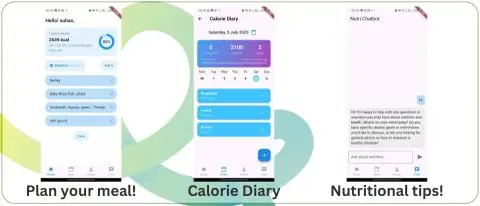
The app. A Flutter app where you pick what is actually on your plate - rice, carrot, beans, fish - and it returns portion sizes computed for you from your own biodata, rather than generic ones. Accounts run through Firebase Auth, the diary is local SQLite so the history works offline, and a FastAPI service in front of a hosted medical language model answers nutrition questions in the terms they are asked in.
The meal box. The part that makes the advice survive contact with a kitchen. It looks like an ordinary lunch box; inside are removable dividers with volume guides. You serve up to the marked line, pull the dividers out, and eat a normal plate of food. No cups, no weighing, no ritual - the measurement happens while you serve, which is the only moment it costs nothing.

The scale, earlier. Before the box, the same idea was tried in hardware: an ESP32 reading a load cell through an HX711, showing weight on an OLED and streaming it to the app over Bluetooth Low Energy. It works, and the firmware is in the repo. It also asks someone to own a gadget, charge it and use it at every meal - and a passive box made of plastic dividers does the same job with nothing to fail. Replacing our own electronics with a moulded tray was the best decision the project made.
The result
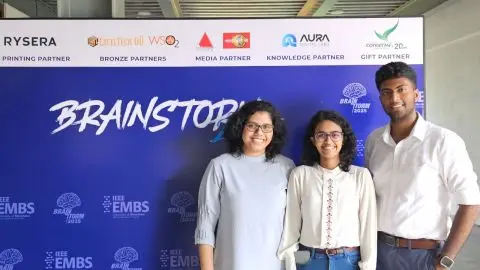
Finalist at Brainstorm 2025, run by the IEEE EMBS Student Branch Chapter at the University of Moratuwa, with a special recognition for innovation. Built with Nilakna Warusawithana, Thiyumi Samarakoon and Hirushi Ranmini, mentored by Dr. Nilanka Wickramasinghe. My part was the Flutter app and the Python backend.